


Gobardhan guarantees the purchase of compressed biogas. Getting clean waste to the plant is still the industry’s problem to solve.
By Isha Mukhtyar, The Ken, Make India Competitive Again, Edition #78, 12 Oct 2026
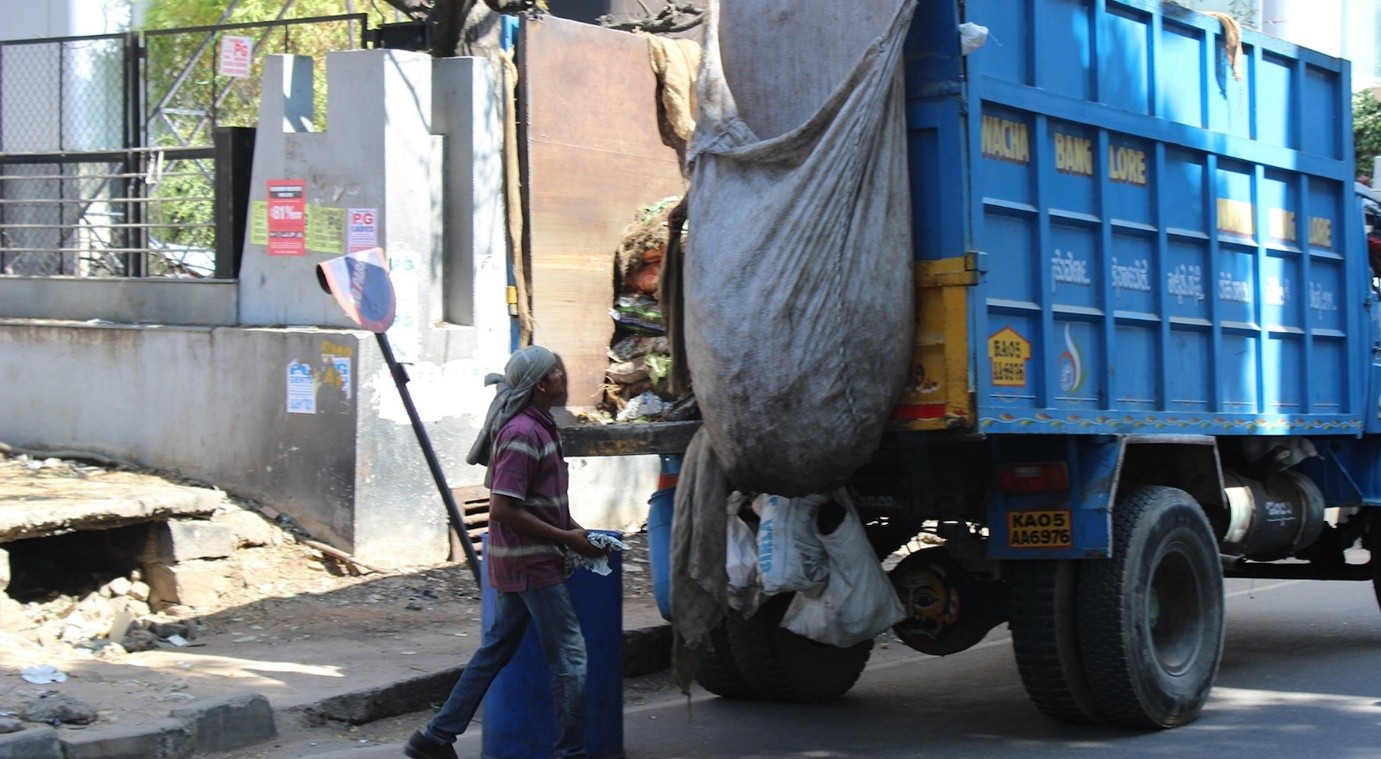
In Indore, India’s cleanest city, Everenviro’s plant converts 500 tonnes of the city’s organic waste into 17 tonnes of compressed biogas (CBG) every day.
The City Gas Distribution Authority buys this and uses it to fuel the city’s 400-bus fleet and blend it into pipelines for domestic use. As Asia’s largest municipal solid waste-to-biomethane plant, it serves as a model for urban biogas plants across the country.
Its success, however, has been difficult for other plants to replicate, despite government policies to support private investment.
On 1 October 2026, the Ministry of Petroleum and Natural Gas launched the Galvanising Organic Bio-Agro Resources Dhan (Gobardhan) scheme with an outlay of Rs 23,731 crore for FY 2026–35. It was meant to scale India’s biogas capacity tenfold by targeting the sector’s economic problems that its 2018 scheme called the Sustainable Alternative Towards Affordable Transportation (Satat) missed—like offering capital assistance and guaranteed buyers of CBG at a fixed procurement rate.
Satat failed to meet its goals. It had big dreams of reaching 5,000 commercial-scale CBG plants with a total production capacity of around 40,000 tonnes a day by 2023–24. But as of February 2026, there were only 134 functional plants.
While most of these plants run on agricultural waste such as crop residue or press mud from sugar mills, animal waste, or napier grass, municipal solid waste offers a highly underutilised feedstock for urban India.
The success story
Indian cities produce about 160,000 tonnes of waste per day, according to the Swachh Bharat Mission-Urban dashboard. Of this, about 50% or 80,000 tonnes is estimated to be organic waste, which could potentially generate about 2,523 tonnes per day of Bio-CNG. Currently, MSW-to-CBG plants only produce about 57 tonnes a day.
Even the limited plants that exist rarely work at full capacity. Average utilisation ranges from 20% to 60% of installed capacity, owing to inconsistent feedstock, infrastructure, and offtake. Transporting what the plants produce is also a challenge: only 17 of the 207 commissioned plants are connected to a pipeline.
Then, earlier this year, the energy shock hit. India, which currently imports about 50% of its natural gas and 60% of its LPG requirements, was exposed to hefty price fluctuations. With cities demanding more energy and generating more waste, the two problems could, in principle, solve each other.
To back the guaranteed offtake of Gobardhan, city gas companies must now sell CBG as part of their CNG and piped gas, starting with 1% blending in 2025–26 and rising to 5% by 2028–29.
While offering a guaranteed buyer and offtake mechanism solves one half of the problem, the new scheme misses a crucial link: feedstock.
The secret to Indore’s success is twofold: guaranteed purchase by the City Gas Distribution Network and 100% segregation at source of waste by the municipal bodies.
Indore has been ranked the cleanest city for eight consecutive years among all cities with a population above one million.
Everenviro has a 20-year public-private partnership with the Indore Municipal Corporation to receive 500 tonnes of organic waste, ensuring a stable feedstock of source-segregated waste at scale for it to convert into CBG and fermented organic manure. While the waste is delivered free of cost, Everenviro, in turn, shares part of its revenue with the municipality as a fixed annual royalty, said Siddhant Srivastava, a general manager at Everenviro.
MSW has two big advantages. First, it arrives every day of the year, unlike crop residue, which comes in only at harvest, about twice a year. And because municipalities already collect it, no one has to aggregate it from scattered farms. Second, the plants sit close to the city gas networks and customers that buy the gas, so transport costs are lower.
The catch, however, is that city waste arrives mixed with plastic, glass, and other inorganic materials. If it isn’t properly segregated to at least 90%, the plant runs less efficiently, operational costs increase, and the biomethane it produces is less pure. This is why cities like Indore make for successful projects.
Another important factor is that, unlike most other cities, where the municipalities hand waste-collection tenders to private contractors, who have no incentive or penalty for collecting mixed waste, Indore’s municipality conducts its own door-to-door collection.
In addition to running awareness campaigns, behavioural change in Indore is brought about by strict penalties for households that do not segregate. “When they started the program, they went as far as cutting off people’s electricity or water connections; now they impose heavy penalties,” Srivastava told The Ken.
Even though Indore’s waste comes largely segregated, about 10% inorganic waste is still mixed into it. Everenviro mechanically removes this in two stages: trommels sort the waste by size, and a specialised machine imported from Germany called the hammer mill separates out sand, silt, and small inorganic pieces, creating a slurry.
What it takes elsewhere
For other cities, however, aggregation and scale remain an issue.
In Bengaluru, where Carbon Masters runs a private MSW-to-CBG plant, the company found a workaround. It has created a joint venture called Sustainable Impacts with Hasiru Dala Innovations, an authorised bulk-waste management company.
Hasiru Dala is licensed by the Bruhat Bengaluru Mahanagara Palike (BBMP) to collect waste from big residential complexes, institutions, and businesses.
They run educational programmes on segregation for housekeeping staff, domestic helpers, and residents and follow up with photographs when they find mixed waste, holding the waste generators accountable. These interventions raise segregated waste to about 90–95% purity.
Municipal waste is the most heterogeneous of the CBG feedstocks. Biomethane generation is biological, so even small shifts in the cities’ food habits, the weather, or the pH levels affect the efficacy of the feedstock.
Segregating wet from dry waste is only the start. A biogas digester also needs the feedstock’s acidity kept in check and certain organic waste kept out. The quick-commerce dark stores Hasiru Dala collects from often throw out a lot of spoiled milk products, which are acidic and skew the pH, reducing the efficacy of the feedstock. Summer brings mango seeds and coconut shells, accounting for 5% of the wet waste collected from households. Although organic, a digester can’t process them.
Hasiru Dala collects about 40–50 tonnes of wet waste every day. Once collected from the bulk waste generators, it aggregates the waste, conducts one level of secondary segregation, and then sends it to the Sustainable Impacts.
“We want to minimise the human handling of wet waste, but imported European technologies, like the hammer mill, are economically unviable unless we reach at least 200 tonnes per day of processing capacity,” said Shekar Prabhakar, the co-founder and CEO of Hasiru Dala Innovations.
The Sustainable Impacts plant then processes the segregated waste to produce about 1.2 tonnes of CBG every day.
For private MSW plants not resorting to municipal waste collection, collecting and transporting waste doubles operating expenditure. Sustainable Impacts has turned the problem around by passing on the operating expenses incurred in waste collection to the waste generators.
“The end-to-end management of wet waste is a negative-value system. Someone has to pay for it to be responsibly processed, so we charge the bulk generators on a polluter-pays principle.”
Shekar Prabhakar, co-founder and CEO, Hasiru Dala Innovations
Hasiru Dala then pays forward a processing fee to Sustainable Impacts. Carbon Masters then handles the offtake of the CBG. The plant generates 96% pure methane, which is compressed into cylinders to replace LPG in restaurants and is also pumped into Gail’s CNG main pipeline.
Even Everenviro, which has started a new plant in Prayagraj with a capacity of 200 tonnes, has spent three years running doorstep awareness drives with the municipality, raising source segregation from near zero to about 60%. The plant now gets about 120 tonnes of segregated waste a day and hopes to reach full capacity as segregation improves.
The lessons across Indore, Bengaluru, and Prayagraj tell us that the plant is only as good as the habits of the city feeding it.