Every morning in a large residential community begins the same way — doors open, newspapers land at thresholds, kitchens come alive, and waste quietly accumulates.
In most communities, waste disappears.
At Raheja Residency, Bengaluru, waste transforms.
Over ten years ago, the leadership at Raheja Residency made a conscious decision: Waste management would not be treated as a housekeeping function. It would be treated as infrastructure.
That decision led to a decade-long operational partnership with Hasiru Dala Innovations, not a short-term vendor contract, but a sustained circular systems collaboration rooted in discipline, data, and design.
For over ten years, Raheja Residency in Bengaluru has partnered with Hasiru Dala Innovations to implement and sustain a decentralized waste management system rooted in source segregation, structured recovery, and measurable environmental performance. What began as an operational intervention has evolved into a decade-long circular partnership, built on trust, discipline, and data.
This is not a short-term service engagement. It is an ongoing operational model that demonstrates what consistency can achieve.
For over ten years, Raheja Residency in Bengaluru has partnered with Hasiru Dala Innovations to implement and sustain a decentralized waste management system rooted in source segregation, structured recovery, and measurable environmental performance. What began as an operational intervention has evolved into a decade-long circular partnership, built on trust, discipline, and data.
This is not a short-term service engagement. It is an ongoing operational model that demonstrates what consistency can achieve.
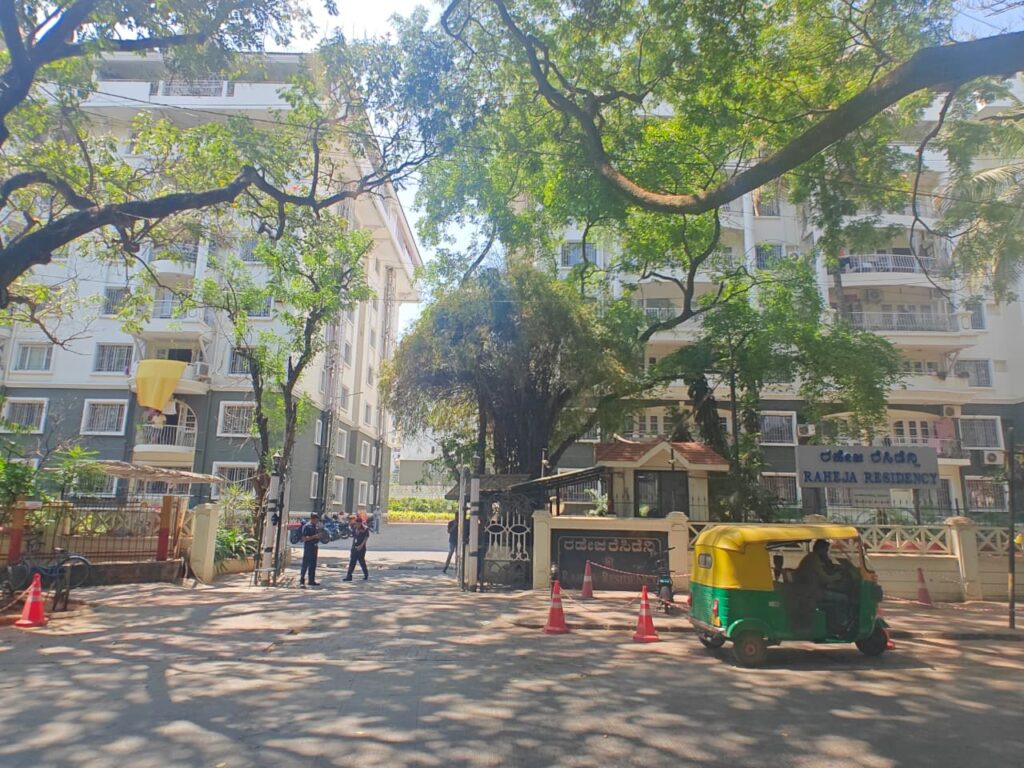
Large residential communities generate complex, multi-stream waste daily. Without structured systems:
Raheja Residency chose to invest in a long-term solution, not just waste clearance, but circular infrastructure.
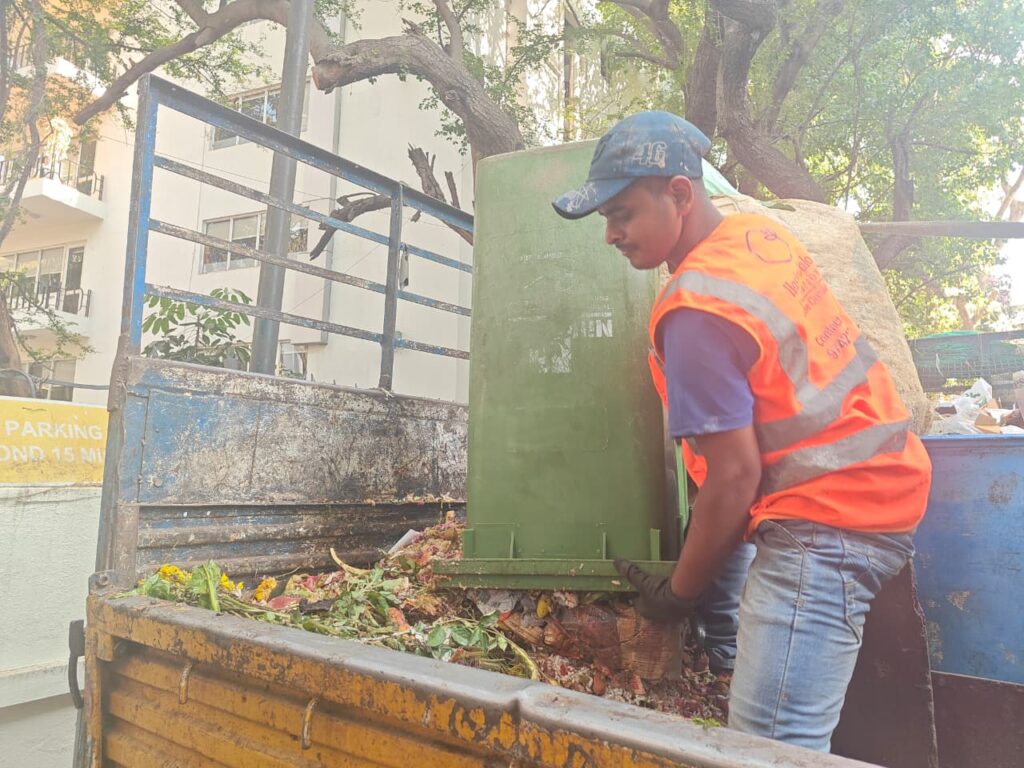
Segregation at Raheja Residency is not positioned as an awareness campaign. It is implemented as a non-negotiable operational standard across:
Compliance is sustained through daily monitoring and periodic refresher training sessions, ensuring that discipline does not dilute over time.
The system is supported by:
The system is supported by:
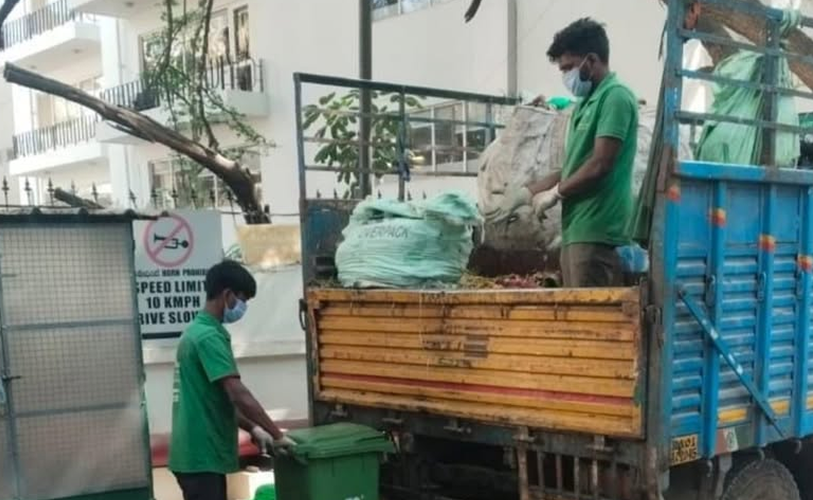
Biogas (Wet Waste) – 74%
This is what sustained circular performance looks like over a decade.
“ We have been associated with Hasiru Dala Innovations for over 10 years for our waste management services.
Our experience with Hasiru Dala Innovations has been extremely positive. Their team consistently ensures efficient and systematic waste collection, maintaining cleanliness across the premises after every service. The staff members are professional, polite, and courteous in their interactions with residents.
We truly appreciate their commitment to quality service and responsible waste management. – Seema Vasudevan, General Secretary of the Raheja Residency ”
Residential waste systems fail when they are treated as logistics problems.
They succeed when they are designed as infrastructure structured, monitored, and continuously improved.
Raheja Residency demonstrates how decentralized models, when implemented with rigor and long-term commitment, can consistently deliver high diversion rates.
The differentiator is not awareness alone.
It is systems thinking & behavioural change.
If your residential community is ready to move beyond collection contracts and build a recovery-driven waste ecosystem,
Partner with Hasiru Dala Innovations.
Let’s design waste systems that deliver measurable landfill diversion, operational stability, and long-term circular impact.
Connect with us to explore how your community can achieve 90%+ landfill diversion.
Got something on your mind?
Fill out the form and we will get back to you.


Copyright © 2025 Hasiru Dala Innovations. All rights reserved