The Indian Institute of Management Bangalore (IIMB), one of Asia’s most prestigious management schools, is a 100-acre campus in South Bengaluru. Home to over 1,200 students, 300 faculty and staff residences, six canteens, cafes, and a bustling start-up incubator, the campus operates like a small township, vibrant, self-contained, and constantly in motion.
Alongside this energy comes a major responsibility: managing nearly 1.5 tonnes of waste per day in a way that aligns with IIMB’s vision of sustainability and accountability.
Recognizing this, IIMB partnered with Hasiru Dala Innovations (HDI), a Bengaluru-based social enterprise working at the intersection of circular economy and social inclusion. The shared goal was clear, ensure that waste generated on campus does not end up in a landfill, but instead becomes a resource that fuels the institution.
While IIMB had long invested in sustainable water and energy systems, waste management posed complex challenges:
HDI’s approach was to design a decentralized waste management system within the campus, integrating people, infrastructure, and processes, to achieve zero waste to landfill.
Callout box:
“A 100-acre campus turning waste into value.”
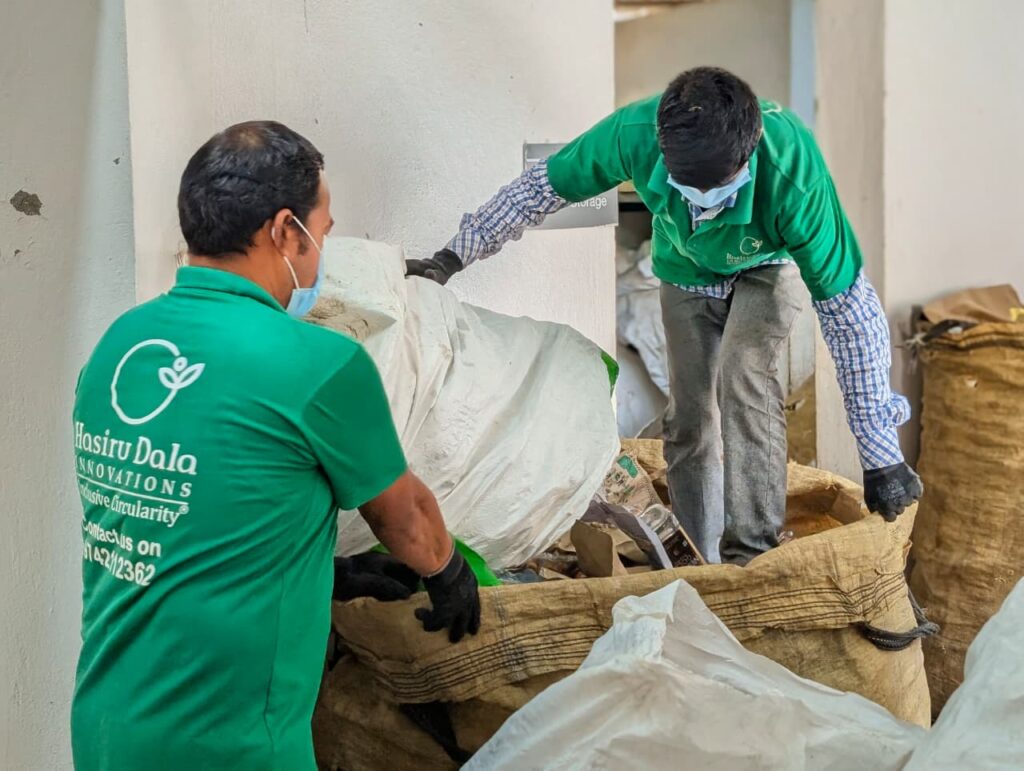
Change begins at the source.
HDI rolled out an extensive awareness and training programme for professors, students, housekeeping staff, and canteen teams. Clear communication materials and a structured bin system enabled segregation into wet, dry, and sanitary waste.
This behavioral shift created the foundation for efficient resource recovery.
An on-campus Waste Management Unit was set up by HDI to process both dry and food waste.
Dry Waste
Food Waste
IIMB follows a dual-path food waste system:
This ensures both soil regeneration and renewable energy creation within the campus boundary.
Reject Waste
Carefully monitored and minimized, achieving consistent landfill diversion of over 90%.
This decentralized, closed-loop model treats most waste within the campus itself.
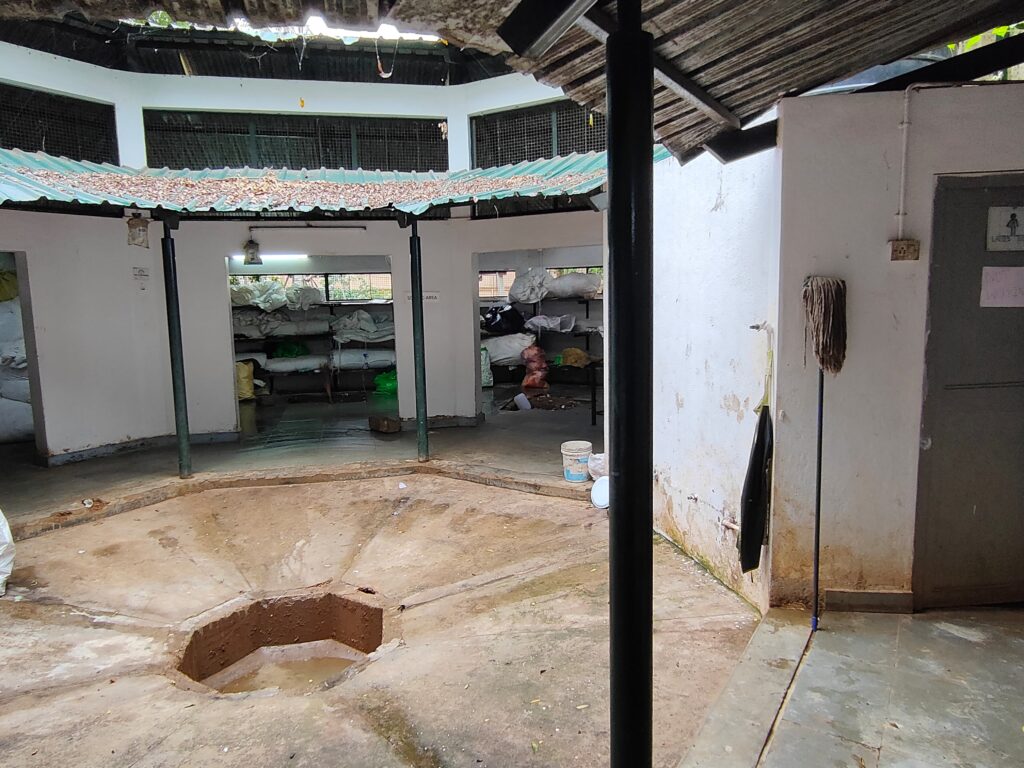
The sorted dry waste is transported using electric vehicles, chosen specifically to avoid noise and air pollution, ensuring that the campus remains a quiet, low-emission environment.
At the Hasiru Dala Innovations Material Recovery Facility (MRF), the waste is aggregated, baled, and channelled to authorized recyclers, ensuring every recyclable material re-enters the supply chain.
IIMB’s partnership with Hasiru Dala Innovations has turned waste management into a live sustainability classroom. Today, the campus is not just managing waste, it is demonstrating what functional circular systems look like in large institutional settings.
“Hasiru Dala Innovations has been a valued partner in strengthening IIMB’s waste management systems. Their handling of collection, segregation, composting, transportation, mechanized treatment of organic waste, and disposal has contributed significantly to our efforts to reduce landfill dependence and promote sustainable campus practices. Their emphasis on process rigor and transparent reporting has enhanced the reliability of our waste management systems and aligned operations with our long-term sustainability goals.”
The programme employs and trains local waste workers, offering dignified livelihoods, safety gear, and fair wages.
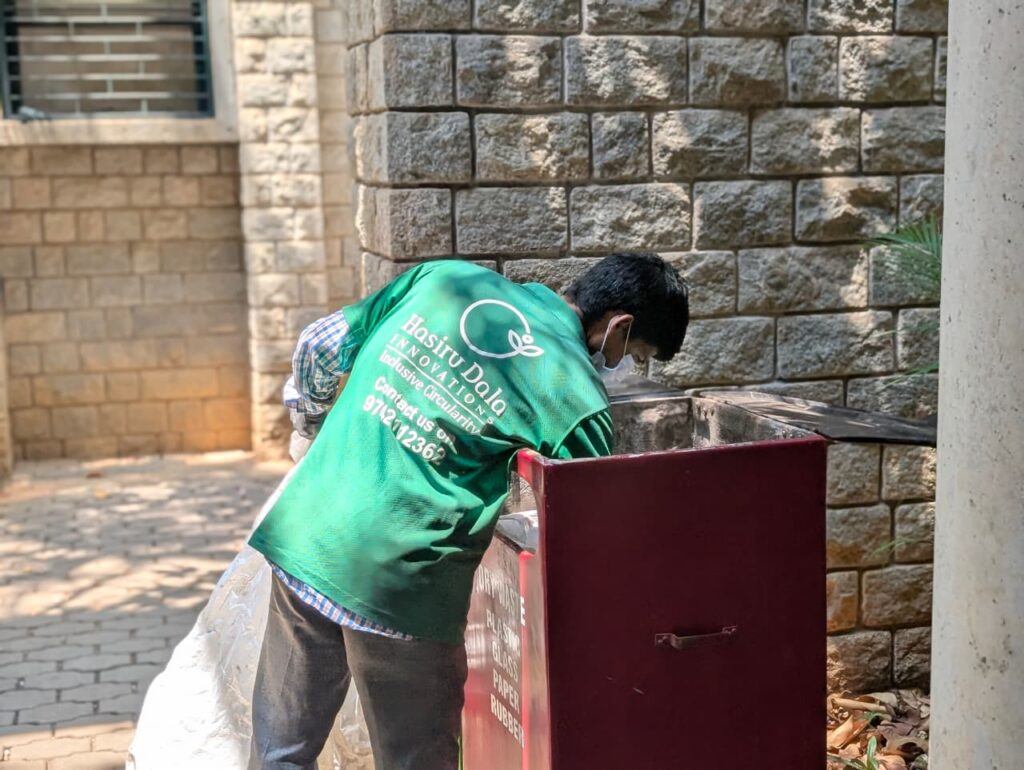
Regular communication campaigns and orientation sessions help embed sustainability into everyday campus life.
Every kilogram of food waste diverted to biogas contributes to renewable energy generation and reduces IIMB’s carbon footprint.
Direct contribution to:
Building on this success, IIMB and HDI are exploring:
The goal: A campus that sends nothing to landfill, a true model for institutional sustainability.
Got something on your mind?
Fill out the form and we will get back to you.


Copyright © 2025 Hasiru Dala Innovations. All rights reserved